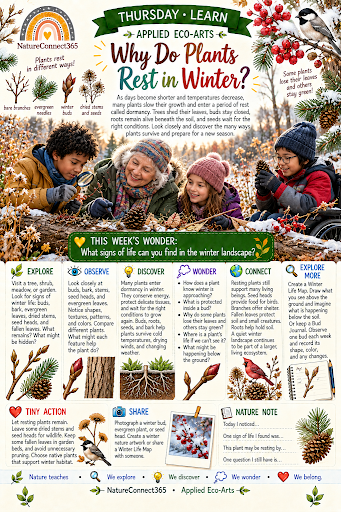
Discovering Dormancy, Seasonal Cues, and the Quiet Life of Plants
Invitation
By late autumn, much of the plant world seems to become quiet.
Leaves have fallen. Flowers have faded. Grasses have turned brown. Garden plants have stopped producing new growth. Bare branches reach into the colder sky.
But quiet does not mean lifeless.
Many plants respond to changing daylight and temperature by slowing their growth, protecting vulnerable tissues, and conserving resources. Roots remain beneath the soil. Buds wait on branches. Seeds rest in the ground. Perennial plants hold living tissues through the winter.
Look closely and discover the life that continues during the resting season.
🌿 Explore
Visit a familiar tree, shrub, garden, meadow, woodland, or neighborhood green space.
Instead of looking for flowers or new leaves, search for signs of plants preparing for or entering winter.
Look for:
bare branches
tightly closed buds
thick bark
evergreen needles or leaves
dried stems
seed heads
cones
berries
plants resting close to the ground
fallen leaves covering the soil
mosses and other plants that remain green
places where roots continue beneath the surface
Choose one tree or perennial plant to observe closely.
What has disappeared since summer?
What remains?
What might be protected where you cannot see it?
🔍 Observe
Look closely at several plants.
Can you notice…
buds at the ends or sides of twigs
different shapes and sizes of buds
scales covering some buds
scars where leaves were once attached
bark with cracks, ridges, spots, or smooth surfaces
flexible and brittle stems
dried flower heads still holding seeds
evergreen leaves with waxy or leathery surfaces
low-growing plants protected near the soil
fallen leaves gathered around plant bases
berries or fruits remaining on branches
vines holding tightly to supports
differences between deciduous and evergreen plants
signs of animals using resting plants for food or shelter
Return to the same plant throughout winter if you can.
What changes?
What stays almost the same?
💡 Discover
Plants need energy and resources to grow.
During the growing season, leaves capture sunlight, roots take up water and minerals, stems lengthen, flowers develop, and fruits and seeds may form.
Winter creates different conditions.
Days become shorter. Temperatures fall. Water may freeze or become less available. Conditions for active growth become more difficult for many plants.
Many perennial plants respond by entering dormancy or greatly slowing their growth and metabolism.
Deciduous trees and shrubs shed their leaves, reducing water loss through those leaves during the colder season. Living tissues remain protected within trunks, branches, roots, and buds.
Many buds form before winter arrives. Protective bud scales can help shield delicate developing tissues from drying and physical damage.
Roots may remain alive below ground even when little appears to be happening above the surface.
Seeds can also enter dormancy. A living seed may wait weeks, months, or sometimes much longer before conditions support germination.
Not every plant responds to winter in the same way.
Evergreens keep functioning leaves or needles through winter, although their growth and photosynthetic activity may slow. Annual plants may complete their life cycle before winter while their seeds carry the next generation forward.
Plants have many ways of meeting the resting season.
💭 Wonder
How does a plant know winter is approaching?
What is happening inside a tree after its leaves fall?
How can roots remain alive beneath cold soil?
What is protected inside a winter bud?
Why do some plants lose their leaves while others remain green?
Why don’t dormant seeds begin growing during a warm November afternoon?
How might snow help protect plants close to the ground?
Why are some winter buds fuzzy, sticky, or covered with scales?
What happens when winter temperatures briefly become warm?
Which plants in your neighborhood remain green?
Which parts of a plant are alive even when they look brown?
What signals might tell a plant that spring is returning?
Winter invites us to look beyond visible growth for signs of life.
🌎 Connect
Plant dormancy is part of a larger seasonal ecosystem.
A tree that has stopped producing leaves may still provide branches where birds perch, bark where insects shelter, cavities used by wildlife, seeds and fruits for food, and roots that help hold soil.
Standing dried stems and seed heads can provide food and shelter for birds and insects.
Fallen leaves create insulating habitat near the soil surface. Snow can add another protective layer, helping moderate temperature changes close to the ground.
Below the surface, roots, fungi, microorganisms, and soil animals remain part of a living system whose activity changes with temperature and moisture.
Some insects overwinter in or around plant stems, bark, leaf litter, or soil. Birds and mammals continue depending on seeds, berries, cones, bark, and other plant resources.
A winter landscape may appear still to us while continuing to hold countless relationships.
Rest is part of the ecosystem’s seasonal rhythm.
🌈 Explore More
Create a Winter Life Map.
Choose one tree, shrub, perennial plant, or small outdoor area.
Draw what you can see above the ground:
trunk
branches
buds
dried stems
seeds
bark
evergreen leaves
leaf litter
snow, if present
Then imagine the view below the surface.
Add:
roots
dormant seeds
bulbs or underground stems if appropriate to your plant
fungi
soil organisms
moisture
stones
decomposing leaves
Use lines, arrows, symbols, textures, or colors to show where life may be waiting, protected, slowing, or continuing.
You can also create a Winter Bud Journal.
Choose one tree or shrub you can revisit. Draw or photograph one bud every week or two.
Record:
date
temperature or recent weather
bud size
bud shape
color
texture
changes in the surrounding branch
anything new you notice
Continue your observations into late winter or early spring.
Your journal can reveal change that might otherwise be too gradual to notice.
❤️ Tiny Action
Let resting plants remain part of winter habitat.
Where it is safe and appropriate:
leave some dried stems standing
allow seed heads to remain for birds and other wildlife
leave some fallen leaves beneath shrubs and trees
avoid unnecessary pruning during the resting season
protect garden soil with leaves or other appropriate natural mulch
leave some berries and seeds for wildlife
avoid disturbing dormant plants unnecessarily
keep pathways, entrances, ramps, and gathering spaces accessible and safe
learn which native plants provide winter food or shelter in your region
choose a resting plant to observe rather than collect
Winter stewardship can sometimes mean doing less.
Allowing parts of a garden or landscape to remain standing, covered, and undisturbed can preserve places where other lives are waiting too.
📸 Share
Photograph signs of quiet plant life.
Create a collection of winter bud drawings.
Compare a deciduous twig with an evergreen branch.
Make a Winter Life Map with someone else and compare what each of you imagined below the soil.
Share:
one sign of life you found in the winter landscape
the most interesting bud you observed
a plant that remains green
something you discovered beneath or among fallen leaves
one animal that depends on plants during winter
one way you can protect resting habitat
something that looked lifeless until you investigated more closely
📝 Nature Note
Today the landscape seemed quiet, but I noticed…
One sign that this plant is still alive was…
Inside the bud I imagine…
Beneath the soil, there may be…
One way this resting plant still supports other life is…
Winter rest may help this plant by…
One question I still have about dormancy is…
#NatureConnect365 #AppliedEcoArts #ThursdayLearn #PlantDormancy #WinterPlants #WinterEcology #SeasonalChange #WinterBuds #PlantLifeCycle #WinterHabitat #OutdoorLearning #NatureStudy #NatureConnection #SeasonalLearning #Wonder