Invitation
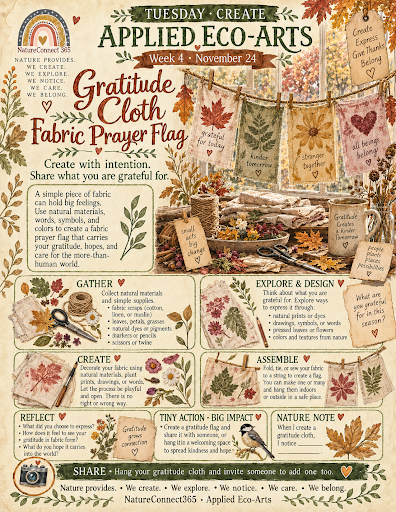
Create a small cloth that holds an expression of gratitude for something you have received from the living world.
Use natural fabric, botanical colors, simple marks, words, symbols, stitching, or impressions to remember a plant, animal, place, season, relationship, or experience that has mattered to you.
Your cloth does not need to be elaborate or permanent. Allow the materials gathered through November—and the relationships they represent—to guide what you create.
Let gratitude become something you can make, hold, share, and offer.
🌱 Materials
Small squares or rectangles of natural fabric such as cotton, linen, muslin, or repurposed fabric
Fabric scraps from previous projects, if available
Natural pigments or dyes explored earlier in the month
Fallen or ethically gathered leaves, petals, grasses, or other botanical materials
Nontoxic fabric markers or permanent markers
Watercolor or botanical inks appropriate for your fabric
Paintbrushes
Small containers for pigments and water
Reused paper for planning
Pencil
Scissors
Twine, natural cord, or reused ribbon
Wooden clothespins or clips
Optional blunt embroidery needle
Optional embroidery thread or yarn
Optional stamps or simple natural printing materials
Protective work surface
Apron or old shirt
Journal or sketch paper
Safety Note: Natural does not automatically mean safe. Some plants can irritate skin or cause reactions, and some berries or plant materials may stain skin, clothing, furniture, and work surfaces. Use only plants you can safely identify, supervise young children, and avoid unknown, toxic, irritating, or protected plants. Natural dyes and botanical art materials are creative materials and should not be eaten.
✨ Create
1 • Begin with Gratitude
Before gathering materials, spend a few moments thinking about the living world around you.
You might step outside, sit beside a window, walk through a familiar place, or remember an experience from the season.
Consider:
A tree you regularly pass
A bird whose call you recognize
Rain that nourished a garden
Food that came from plants
A favorite outdoor place
An animal encounter
A changing leaf
Sunlight through a window
Soil beneath your feet
A person with whom you shared time outdoors
Something the season helped you notice
A relationship you would like to remember
You do not have to force gratitude.
Simply notice whether something naturally comes to mind.
2 • Choose What Your Cloth Will Hold
Select one experience, relationship, place, or living being you would like your cloth to honor.
Ask yourself:
What am I grateful to have received?
Your answer might be a word:
Shelter
Water
Friendship
Warmth
Food
Beauty
Rest
Belonging
Courage
Change
Memory
Home
Or it might be something that cannot easily be named.
Your cloth can hold that, too.
3 • Visit Your November Colors
Look back at colors, marks, materials, photographs, sketches, or journal pages created during November.
Remember:
Colors discovered through natural dye exploration
Shades recorded in your Color Collection Journal
Botanical marks created through bundle wrapping
Leaves, berries, bark, grasses, seeds, and soil you noticed
Colors that changed
Materials that surprised you
Places you visited
Questions that stayed with you
Choose one or more colors that feel connected to the gratitude you want your cloth to hold.
4 • Prepare the Cloth
Choose a small piece of natural fabric.
Notice it before adding anything.
Explore:
Texture
Weight
Weave
Edges
Existing marks
Wrinkles
Light passing through it
The way it moves in your hands
If you are using reclaimed cloth, notice that it may already carry a history.
Decide whether to leave the edges unfinished, trim them, fold them, or stitch them.
Imperfection can remain part of the work.
5 • Discover Your Symbol
Before marking the cloth, experiment on reused paper.
What shape, line, word, or symbol might represent your gratitude?
Try:
A leaf
A seed
A spiral
A circle
A branching line
A wave
A sun
A bird
A root
A pathway
A simple hand-drawn mark
A word or short phrase
A symbol of your own invention
You do not need to explain the symbol to anyone else.
It only needs to hold meaning for you.
6 • Add Color and Botanical Marks
Begin creating on the cloth.
You might:
Brush on natural pigment
Make a botanical print
Rub plant color directly onto fabric
Add marks inspired by leaf veins
Paint a simple symbol
Write a gratitude word
Create repeating dots or lines
Add a border
Stitch a simple shape
Layer several translucent colors
Incorporate a botanical mark from an earlier November exploration
Allow some of the cloth to remain unmarked if that feels right.
Notice how the fabric and pigments respond rather than trying to control every result.
7 • Add Words, If You Choose
Your gratitude cloth does not need words.
If you would like to include them, keep the message simple.
You might write:
Thank you.
I remember.
For shelter.
For water.
For this place.
For changing seasons.
For what nourishes us.
For what continues.
Or write your own word, sentence, name, or quiet message.
You may also place your words on the back so they remain private.
8 • Create a Way to Hang or Hold It
Decide how your cloth will live after you finish creating it.
You might:
Clip it to a piece of twine
Stitch a small loop along the top
Hang it beside other gratitude cloths
Place it on a seasonal table
Display it near a window
Carry it in a journal or nature kit
Give it to someone
Place it beside a meaningful natural object
Create a family or classroom gratitude strand
Keep it somewhere you regularly pause
If several people participate, individual cloths can be joined into a shared line of gratitude while allowing each person’s contribution to remain distinct.
9 • Offer a Moment of Attention
When your cloth is complete, pause with it.
Notice what you made.
Notice what you did not make.
Notice the materials that participated.
Then return your attention to the relationship that inspired the cloth.
Your gratitude does not need to become a performance or a declaration.
It can simply become a moment of recognition:
I noticed. I received. I remember. I am grateful.
🎨 Create with Gratitude Cloths
Use your cloth to:
Create a seasonal gratitude display
Make a family gratitude strand
Build a classroom installation
Create a community gratitude line
Honor a favorite tree
Remember a meaningful place
Celebrate a seasonal relationship
Create a botanical color study
Pair symbols with nature observations
Explore simple hand stitching
Record November colors
Create a personal meditation cloth
Offer a handmade gift
Mark the transition toward winter
Create an annual seasonal gratitude tradition
🔍 Notice
Pay attention to:
The texture of the fabric
How natural pigments behave on cloth
Colors that spread, fade, deepen, or overlap
Botanical marks that remain clear or become abstract
The difference between drawing on paper and fabric
The feeling of stitching slowly by hand
Which symbols arise naturally
Which colors carry memories
How reclaimed fabric changes the meaning of the work
The movement of the finished cloth in air
Light passing through thin fabric
How several individual cloths look together
How creating changes your attention toward the thing you are honoring
💭 Wonder
What does gratitude feel like before we put it into words?
Can a color hold a memory?
Can a mark represent a relationship?
Why do people create objects to remember important experiences?
How can art help us pay attention?
What have plants provided in our everyday lives?
Where did the fibers in our fabric originate?
What living systems made those fibers possible?
How does using reclaimed cloth change the story of an artwork?
What happens when several individual expressions become one shared display?
Does an offering need to last forever to have meaning?
What might gratitude ask us to do next?
🌎 Connect
Fabric begins with materials.
Cotton and linen come from plants. Wool comes from animals. Many dyes historically came from leaves, roots, bark, flowers, fruits, seeds, fungi, insects, minerals, and other sources before synthetic dyes became widespread.
This means a piece of cloth can connect us with many relationships: plants, animals, soil, water, sunlight, agriculture, human knowledge, craft traditions, labor, transportation, and the places where materials are grown and transformed.
Creating with reclaimed natural fabric can extend the useful life of something that already exists. Using small quantities of responsibly gathered botanical materials can also help us practice making without assuming that everything beautiful outdoors needs to be collected.
The gratitude cloth invites us to notice these relationships.
Rather than treating nature only as material for our artwork, we can ask:
What made this creation possible?
And:
How might gratitude become care?
🌈 Explore Further
Research where cotton or linen comes from.
Investigate traditional plant dyes from different cultures.
Create a color using onion skins, tea, berries, or another safe plant material.
Compare natural pigment on paper and fabric.
Make a gratitude cloth for each season.
Create a family gratitude strand.
Invite several generations to contribute cloths.
Record the story behind each symbol.
Create a map showing where your materials originated.
Explore simple embroidery stitches.
Compare new and reclaimed fabric.
Photograph your cloth in the place that inspired it.
Write a short gratitude poem to accompany the cloth.
Notice how the fabric changes over several months.
Create a winter threshold display using the month’s collected colors and memories.
📸 Share
Photograph your finished gratitude cloth or the place where it is displayed.
Share:
What inspired your gratitude
A November color you carried into the piece
A botanical material you used
The meaning of a symbol
A word you chose
Something you noticed while creating
A relationship you want to remember
Where your cloth now lives
The name you gave your creation
Share with #NatureConnect365 and invite others to notice something from the living world they would like to remember with gratitude.
❤️ Tiny Action • Big Impact
Let your gratitude become one small act of care.
If your cloth honors a tree, leave fallen leaves beneath trees where appropriate.
If it honors birds, learn about one way to support local bird habitat.
If it honors water, reduce one source of unnecessary water use.
If it honors a favorite place, pick up a few pieces of litter.
If it honors food, reduce food waste or compost what you can.
If it honors another person, share your gratitude with them.
Gratitude becomes especially meaningful when noticing grows into relationship—and relationship helps guide how we care.
📝 Nature Note
My gratitude cloth honors:
I am grateful for:
The place or relationship that inspired it was:
The November colors I chose were:
The botanical materials I used were:
My symbol or mark represents:
While creating, I noticed:
One thing that surprised me was:
My gratitude might become an act of care by:
I named my gratitude cloth:
#NatureConnect365 #AppliedEcoArts #GratitudeCloth #PrayerFlag #NatureArt #FiberArt #BotanicalArt #EcoArt #NatureCrafts #CreativeNature #NatureConnection #NovemberNature #SeasonalLiving #GratitudePractice #CreateWithNature