🌼 Make Painted Rhythm Sticks
🥁 Make Painted Rhythm Sticks
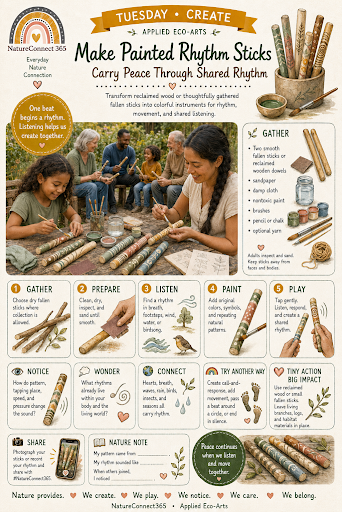
Transform reclaimed wood or thoughtfully gathered fallen sticks into colorful instruments for rhythm, movement, and shared listening. Discover how pattern, sound, repetition, and cooperation can help separate beats grow into one community rhythm.
Paint a pair for personal rhythm-making or create several sets for a shared circle.
🌱 Materials
Two smooth, dry fallen sticks or reclaimed wooden dowels
Suggested length: approximately 8–12 inches
Fine-grit sandpaper
Damp cloth
Nontoxic acrylic, tempera, or natural paint
Paintbrushes in several sizes
Paint palette or reused container lids
Water container
Protective cloth or reclaimed cardboard
Pencil or chalk for planning patterns
Optional paint pens or permanent markers
Optional reclaimed yarn, ribbon, or fabric strips
Optional nontoxic water-based sealant
Journal or paper for sketching patterns
A quiet outdoor or indoor place for exploring sound
Safety Note: Adults should inspect and sand sticks until they are smooth and free from sharp points, loose bark, splinters, mold, or cracks. Keep rhythm sticks away from faces and bodies, and use gentle tapping during shared play.
✨ Create
1 • Gather Thoughtfully
Look for two dry, fallen sticks that are already separated from a tree or shrub.
Choose sticks that are:
Similar in length
Comfortable to hold
Free from insects and active animal homes
Dry and sturdy
Smooth enough to prepare safely
Narrow enough for your hands
Gather from a place where collection is permitted. Leave living branches attached and allow logs, decaying wood, and habitat materials to remain in place.
Reclaimed wooden dowels, old wooden spoons, or clean scrap wood can also become rhythm sticks.
2 • Prepare the Wood
Ask an adult to inspect the sticks carefully.
Remove loose dirt with a dry brush or damp cloth. Allow the wood to dry fully.
Sand rough areas, sharp ends, and small protrusions until each stick feels comfortable in your hands. Wipe away the sanding dust.
Pause to notice:
The weight of each stick
Its curves and knots
The direction of the wood grain
Natural color variations
The sound made when the unpainted sticks meet
3 • Listen for a Pattern
Before painting, spend a few moments listening to the place around you.
You might hear:
Footsteps
Breathing
Bird calls
Insect rhythms
Moving water
Rustling leaves
Rain
Wind
A heartbeat
Voices moving through a shared space
Choose one rhythm, movement, or natural pattern as inspiration for your design.
Tap the sticks together gently and listen for a steady beat.
4 • Plan Your Design
Sketch a simple design on paper or lightly mark the sticks with pencil or chalk.
Your patterns might include:
Lines inspired by rain
Waves inspired by water
Dots inspired by seeds
Spirals inspired by shells or unfurling plants
Bands inspired by tree rings
Branching lines inspired by roots and leaf veins
Repeated shapes inspired by footsteps
Colors from your Nature’s Color Wheel of Peace
Your personal Peace Symbol Sigil
A pattern that represents listening or belonging
Create original patterns connected with your own observations, experiences, and sense of place.
5 • Paint the Rhythm Sticks
Place the sticks on a protected work surface.
Begin with larger fields or bands of color. Allow each area to dry before turning the sticks or adding smaller details.
Try:
Alternating color bands
Repeating dots and dashes
Mirrored patterns
A pattern that changes from one end to the other
One design divided between two sticks
Symbols that align when the sticks are held together
A calm pattern on one stick and an energetic pattern on the other
Leave some wood visible so its grain and earlier life remain part of the design.
6 • Add Texture and Meaning
When the first layer is dry, add smaller marks, words, or symbols.
You might include:
Listen
Together
Peace
Belong
Breathe
Respond
One small heart
A leaf or root
An open spiral
A flowing wave
A shared rhythm symbol
Tie a small piece of reclaimed yarn or fabric around one end if it can be secured without interfering with safe use.
An adult may add a thin layer of nontoxic water-based sealant after the paint has dried completely.
7 • Explore Your Rhythm
Hold one stick comfortably in each hand.
Begin slowly:
Tap the sticks together once.
Pause and listen.
Repeat the sound at a steady pace.
Try a faster or slower beat.
Alternate loud and soft taps.
Add movement, walking, or swaying.
Invite someone else to answer your rhythm.
Explore sounds by gently tapping:
Stick to stick
One end to the other
Center to center
A stick against your open palm
A stick against a safe wooden sound surface
Keep the sound gentle around wildlife, shared public spaces, and sound-sensitive participants.
8 • Create a Shared Rhythm
Gather in a circle or sit near one another.
One person begins a simple repeating beat. Others listen before joining.
Try:
Copying the first rhythm
Adding a quiet supporting beat
Taking turns leading
Passing one rhythm around the circle
Creating a call-and-response pattern
Beginning softly and growing together
Returning gradually to silence
End with one final shared beat, followed by a quiet pause.
Notice what remains in the body after the sound ends.
🎨 Create with Your Rhythm Sticks
Use your painted sticks to:
Accompany a nature walk
Explore call-and-response
Create rhythms inspired by birdsong
Add sound to a story or poem
Support a movement activity
Keep a steady beat during a community walk
Create a sound-and-silence meditation
Accompany peace doves or peace flags in a procession
Explore fast, slow, loud, and soft sounds
Create a family rhythm
Lead a community rhythm circle
Pair each painted pattern with a different beat
Carry September’s peace theme forward through shared sound
🔍 Notice
As you create and play, pay attention to:
The natural grain and texture of the wood
How the sticks feel in your hands
How paint changes the surface
Patterns that emerge through repetition
Differences between the two sticks
How sound changes with the tapping location
Loud, soft, fast, and slow rhythms
Changes in breathing and movement
The space between sounds
How your rhythm responds to another person
The moment separate beats begin to feel connected
The silence that follows the final tap
💭 Wonder
How do repeating patterns help us recognize rhythm?
What rhythms already live within your body?
What rhythms can you hear in the living world?
How does the type of wood influence sound?
What changes when several people play together?
How can listening help a group stay connected?
Can silence be part of a rhythm?
How might a painted pattern become a sound?
What helps a rhythm feel peaceful?
How do communities use rhythm to gather, communicate, remember, and celebrate?
What does it mean to lead while continuing to listen?
🌎 Connect
Rhythm is present throughout the living world. Hearts beat, lungs breathe, waves arrive and recede, rain gathers and releases, birds repeat calls, insects pulse through summer evenings, and seasons return through cycles of change.
Trees also hold rhythm within their growth. Their rings record cycles of active growth and seasonal rest. Branches, roots, bark, and leaf veins create repeating visual patterns shaped by water, sunlight, wind, soil, and time.
Human communities have long created rhythm through clapping, stepping, singing, drumming, and striking simple objects together. Shared rhythm supports communication, movement, memory, celebration, and belonging. Each musical tradition carries its own history and meaning. Creating original rhythms from personal and place-based observation allows participants to join this wider human relationship with sound respectfully.
🌈 Explore Further
Create a rhythm inspired by your walking pace.
Match a painted pattern with a repeated sound pattern.
Compare sticks made from different types or thicknesses of wood.
Explore how the sound changes when you hold a stick near the end or center.
Create a four-beat rhythm and pass it around a circle.
Use one stick to lead and one to respond.
Pair rhythm with breathing or gentle movement.
Create a sound map of an outdoor place.
Add a spoken word between beats.
Explore rhythm with participants seated, standing, or moving.
Create a shared rhythm for a peace procession.
Record the group rhythm and listen again.
End each sound exploration with a period of quiet observation.
📸 Share
Photograph your painted rhythm sticks or record a short sound sample of your rhythm.
Share:
The natural pattern that inspired your design
The colors and symbols you selected
The sound your sticks created
A rhythm learned from the surrounding place
What happened when others joined
How listening changed the shared experience
The name of your rhythm
Share your creation with #NatureConnect365 and invite someone else to listen, respond, and create with you.
❤️ Tiny Action • Big Impact
Use reclaimed wood or gather only small fallen sticks from places where collection is permitted. Leave living branches, decaying logs, and habitat materials in place for plants, fungi, insects, and other animals.
Invite someone into a shared rhythm and listen closely to the sound they contribute.
One beat can begin a rhythm. Careful listening helps many people create together.
📝 Nature Note
My sticks came from:
The pattern that inspired my design was:
The colors I chose represent:
My rhythm sounded like:
When another person joined, I noticed:
The silence after our final beat felt:
I named our rhythm:
#NatureConnect365 #CreateWithNature #AppliedEcoArts #SharedRhythm #PaintedRhythmSticks #PeaceInMotion #CommunityRhythm #AppliedEcoArts #MoveTogether #NatureEveryDay