🍎 Make Baked Apples
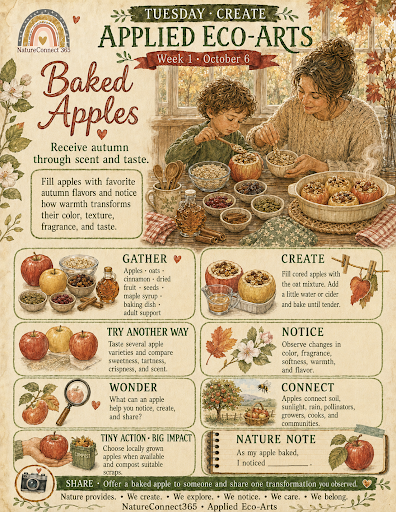
Transform locally grown apples into a warm seasonal offering filled with cinnamon, oats, dried fruit, seeds, and other favorite autumn flavors. Explore how heat changes an apple’s color, texture, fragrance, and taste while discovering the relationships connecting orchards, pollinators, weather, growers, cooks, and communities.
Prepare one apple for yourself or bake several to share around a seasonal table.
🌱 Ingredients & Materials
One firm baking apple for each person
Rolled oats
Cinnamon
Raisins, dried cranberries, or chopped dried apples
Sunflower or pumpkin seeds
Chopped nuts, if appropriate for your group
Maple syrup, honey, or brown sugar
Butter or a plant-based alternative
Apple juice, cider, or water
Optional nutmeg, ginger, cloves, or cardamom
Optional lemon juice
Small mixing bowl
Spoon
Measuring spoons
Baking dish
Oven mitts
Cutting board
Apple corer or paring knife for adult use
Journal or paper for recording observations
Safety Note: An adult should operate the oven and help with coring, cutting, and handling hot dishes. Check all ingredients for food allergies and dietary needs. Allow baked apples to cool before tasting. Honey should not be served to children younger than one year.
✨ Create
1 • Meet the Apples
Gather one apple or several varieties from a local orchard, farmers market, garden, farm stand, or grocery store.
Before beginning, notice:
The apple’s color and markings
Its shape and size
The smoothness or texture of its skin
The scent near the stem
Its weight in your hand
The place where it was grown
The name of the variety, if known
If you have several varieties, compare them. Some apples remain firm while baking, while others become especially soft.
2 • Wash and Prepare
Wash your hands and rinse the apples under clean running water.
Ask an adult to remove the center of each apple while leaving the bottom intact. This creates a small hollow that can hold the filling.
Pause to examine the apple’s inner structure:
Skin
Flesh
Core
Seeds
Stem
Star-like chambers surrounding the seeds
Place the apples upright in a baking dish.
3 • Create the Filling
Combine oats, cinnamon, dried fruit, seeds, and other selected ingredients in a bowl.
Add a small spoonful of maple syrup, honey, brown sugar, butter, or plant-based spread. Mix until the ingredients begin to hold together.
Explore different combinations:
Apple, oat, and cinnamon
Cranberry and orange zest
Raisin and nutmeg
Maple and pumpkin seed
Ginger and dried pear
Sunflower seed and cardamom
Smell each spice before adding it. Notice which fragrances feel warming, bright, sweet, earthy, or familiar.
4 • Fill the Apples
Spoon the mixture into each apple.
Notice the colors and textures gathering inside the fruit. Press the filling gently so it settles into the center.
Add a small amount of apple juice, cider, or water to the bottom of the baking dish. This moisture helps the apples soften as they bake.
5 • Bake with Care
With adult support, bake the apples at approximately 375°F until they are tender. Depending on the variety and size, this may take about 30–45 minutes.
Observe from a safe distance as the apples change:
The skin may wrinkle or deepen in color.
The fruit may soften and release juice.
The filling may become golden.
The fragrance may move through the room.
The liquid in the dish may become a warm apple sauce.
An adult can test tenderness with a fork. Remove the baking dish carefully and allow the apples to cool.
6 • Create a Seasonal Place Setting
While the apples cool, prepare a welcoming place for tasting.
You might add:
A washable cloth napkin
A small autumn leaf
A handwritten place card
A drawing of an apple
A sprig of an aromatic garden herb
A gratitude message for someone sharing the meal
Keep natural decorations separate from food unless they are known to be edible and safely prepared.
7 • Taste Slowly
Begin by noticing the fragrance. Take a small bite and allow yourself time to experience it.
Pay attention to:
Warmth
Sweetness
Tartness
Softness
Spice
Juiciness
Contrasting textures
Feelings or memories connected with the flavor
Share one word describing the experience.
8 • Share the Abundance
Offer an apple to a family member, friend, neighbor, or community participant. Tell them where the apple came from, if known, and describe one change you observed while it baked.
End by thanking the many relationships that helped bring the apple to the table.
🎨 Create with Apples
Use this seasonal experience to:
Compare several apple varieties
Make an apple color study
Draw the star-shaped seed chambers
Create apple prints with an adult-prepared apple half
Write a short apple poem
Map the journey from orchard to table
Record family apple recipes
Create a fragrance chart for autumn spices
Prepare a community apple tasting
Save suitable seeds for observation
Compost food scraps
Visit a local orchard or farm stand
🔍 Notice
As you prepare, bake, and taste, notice:
Differences among apple varieties
The scent of the apple before and after baking
The pattern inside the core
How ingredients change when combined
The gradual softening of the fruit
The movement of fragrance through the room
The sound of cutting, mixing, and spooning
Changes in hunger and anticipation
Memories awakened by familiar flavors
How sharing food changes the experience
What remains after the meal
💭 Wonder
Why do some apples taste sweet while others taste tart?
What helps an apple blossom become fruit?
How do bees participate in an orchard?
Why do different varieties respond differently to baking?
How does heat transform food?
Which autumn spices come from seeds, bark, roots, or fruits?
How far did each ingredient travel?
What apple traditions live within your family or community?
How can preparing food become a creative practice?
What does it feel like to make something nourishing for another person?
🌎 Connect
An apple carries a community of relationships. Soil anchors the tree. Rain and roots provide water. Leaves gather sunlight. Bees and other insects move pollen among blossoms. Growers tend the orchard, and seasonal weather shapes the harvest.
Apple trees also connect generations. Some orchards preserve varieties that have been grown for hundreds of years. Recipes travel through families and communities, carrying memories of places, celebrations, and shared tables.
Preparing a baked apple invites us to receive autumn through the senses and recognize food as part of a living system.
🌈 Explore Further
Compare local and distant apple varieties.
Research which varieties grow in your region.
Create a sweet, tart, crisp, and soft tasting chart.
Observe an apple slice as it browns.
Add lemon juice to one slice and compare the change.
Investigate the role of pollinators in fruit production.
Make a map of nearby orchards.
Interview someone about a favorite apple recipe.
Estimate and measure the ingredients.
Compare the apple’s weight before and after baking.
Create a zero-waste plan for the scraps.
Return composted apple material to healthy soil.
📸 Share
Photograph your baked apples or seasonal table.
Share:
The apple variety you selected
The ingredients in your filling
A fragrance you noticed
A change caused by heat
The source of your apples
A family food memory
The person with whom you shared
The name of your apple creation
Share your creation with #NatureConnect365 and invite someone to receive autumn through scent and taste.
❤️ Tiny Action • Big Impact
Choose locally or regionally grown apples when available. Local purchasing can strengthen nearby farms, shorten transportation distances, and deepen your relationship with the seasonal foods of your place.
Compost suitable cores, peels, and scraps. One carefully prepared apple can connect nourishment, creativity, gratitude, and care.
📝 Nature Note
My apple variety was:
My apple came from:
Before baking, it smelled like:
The filling I created included:
As the apple baked, I noticed:
The first bite tasted and felt like:
I shared my apple with:
I named my creation:
#BakedApples #AutumnActivities #FallActivitiesForKids #FamilyBaking #AppleSeason #SeasonalEating #SensoryLearning #NatureBasedLearning #EcoArts #AppliedEcoArts #NatureConnect365