Discovering Pigments, Plant Parts, and the Living Work of Color
Invitation
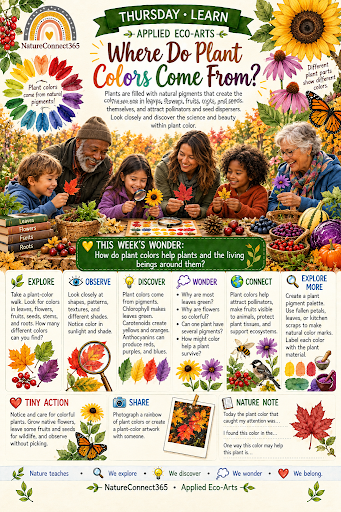
Plants fill the world with color.
Green leaves. Golden flowers. Red berries. Purple fruits. Orange roots. Dark seeds. Even within a single plant, many different colors may appear.
These colors come from natural substances called pigments. Some help plants capture sunlight. Others help protect plant tissues or become visible to pollinators and animals that disperse seeds.
Look closely and discover the science, ecology, and relationships living within plant color.
🌿 Explore
Take a plant-color walk outdoors, visit a garden, or explore plant foods and materials you already have at home.
Look for plant colors in:
leaves
stems
bark
flowers
fruits
berries
vegetables
roots
seeds
pods
cones
How many colors can you find?
Look beyond the basic color names. Is a leaf simply green, or is it moss green, yellow-green, blue-green, silver-green, or deep forest green?
Is something red—or crimson, rust, rose, burgundy, or scarlet?
Create a plant-color collection without removing living plants. Use naturally fallen materials, photographs, sketches, or written color notes where collection is not appropriate.
Can you create a rainbow using only colors you discover in plants?
🔍 Observe
Choose several plant materials and look closely.
Can you notice…
more than one color within a single leaf
darker and lighter areas
color concentrated along veins or edges
different colors on the two sides of a leaf
spots, stripes, speckles, or patches
brightly colored fruits against green leaves
dark seeds hidden inside colorful fruits
flowers with differently colored centers
colors changing as fruits ripen
fading colors in aging flowers
pigments beneath a peel or skin
colors that appear when a plant material is crushed
similar colors appearing in unrelated plants
Look at the same plant in sunlight and shade. Does its color appear different?
Plant color rewards slow looking.
💡 Discover
Plant colors are created by substances called pigments. Pigments absorb some wavelengths of visible light and reflect others. The reflected light contributes to the colors we see.
Chlorophyll gives many plant tissues their familiar green color. It plays an essential role in photosynthesis, helping plants capture light energy that can be used to make sugars.
Carotenoids produce many yellow, orange, and golden colors. They occur in leaves and in familiar foods such as carrots, pumpkins, and some fruits.
Anthocyanins contribute red, purple, and blue colors to many flowers, fruits, and leaves.
Plants may contain several pigments at the same time. Sometimes one pigment is so abundant that it masks the others. As plants grow, ripen, age, or respond to seasonal conditions, the colors we can see may change.
Pigments can do different kinds of work. Some participate in photosynthesis. Some help protect plant tissues from environmental stress. Brightly colored flowers can help attract pollinators, while colorful ripe fruits may attract animals that eat the fruit and carry or deposit the seeds elsewhere.
Plant color is beautiful—but it is also functional.
💭 Wonder
Why are so many leaves green?
Why aren’t all plant parts the same color?
Can one plant contain several different pigments?
Why do fruits often change color as they ripen?
Why are many flowers brightly colored?
Can insects and other animals see the same colors we see?
Why are some roots colorful even though they grow underground?
Why are some seeds pale while others are red, brown, black, or patterned?
How might color protect a plant?
How might color help a plant reproduce?
Why do some plant colors change with the seasons?
Every plant color can become an invitation to investigate a relationship.
🌎 Connect
Color helps connect plants with the living world around them.
Flowers may use color, scent, shape, and other signals that help pollinators locate them. Bees, butterflies, moths, birds, beetles, and other animals may respond to different floral signals.
Fruits often become more colorful as they ripen. Their changing appearance can help make them noticeable to animals. When an animal eats a fruit, its seeds may be carried away from the parent plant and deposited somewhere new.
Color can also support the plant itself. Pigments participate in capturing light, protecting tissues, and responding to environmental conditions.
A colorful garden, meadow, woodland, or hedgerow is therefore more than something beautiful to look at.
It is filled with ecological information and relationships.
🌈 Explore More
Create a Plant Pigment Palette.
Gather a small amount of permitted, abundant plant material or use kitchen scraps that would otherwise be composted. Possibilities might include:
berry skins
red cabbage
beet peelings
spinach or other leafy greens
onion skins
flower petals that have already fallen
colorful fruit peels
Place each material on a separate piece of heavy paper.
Try rubbing, pressing, crushing, or gently smearing the material across the surface.
What color appears?
Compare the mark with the original plant material.
Does a purple berry make a purple mark?
Does a green leaf produce the green you expected?
Does the color change as it dries?
Arrange your marks into a Nature’s Color Wheel, pigment chart, color strip, or abstract artwork.
Label each color with the plant material that created it.
Use only known, non-toxic plant materials for hands-on pigment experiments. Avoid unknown berries, mushrooms, irritating plants, and protected species, and wash hands after handling plant materials.
❤️ Tiny Action
Let plant color guide you toward care.
Choose one colorful plant that attracts your attention and learn something about its relationships.
You might:
identify the plant
notice which insects visit its flowers
watch whether birds or mammals eat its fruits
leave seed heads standing where appropriate
grow native flowering plants for pollinators
allow some fruits or seeds to remain for wildlife
avoid picking wildflowers unnecessarily
use fallen or kitchen-scrap plant materials for art
photograph color instead of collecting it
notice how plant colors change through the season
Color can become a doorway into stewardship when noticing leads to curiosity, relationship, and care.
📸 Share
Create a plant-color palette from your discoveries.
Photograph a rainbow of plant colors.
Make a watercolor, colored-pencil, fabric, collage, or pigment study inspired by one plant.
Invite someone to take a color walk with you.
Share:
the most unexpected plant color you found
where you found the brightest color
one pigment you learned about
one way color helps a plant
an animal that may respond to plant color
one way your color exploration changed what you noticed
📝 Nature Note
Today the plant color that called my attention was…
I found this color in the plant’s…
When I looked more closely, I noticed…
One way color may help this plant is…
This plant’s color connects it with…
One question I still have about plant pigments is…
#NatureConnect365 #AppliedEcoArts #ThursdayLearn #PlantColors #PlantPigments #NatureColors #Chlorophyll #Carotenoids #Anthocyanins #PlantScience #OutdoorLearning #NatureConnection #NatureArt #Wonder