Discovering Pigments, Weathering, and the Changing Life of a Fallen Leaf
Invitation
Autumn color continues to change long after a leaf turns red, yellow, orange, or gold.
A brilliant leaf falls to the ground. Its colors soften. Its surface dries. Edges curl. Spots appear. Eventually, bright colors become rust, tan, and brown as the leaf begins returning to the soil.
Fading is not simply the disappearance of autumn color.
It is another stage in the life of a leaf.
Look closely and discover what happens as autumn’s brilliant colors become part of the forest floor.
🌿 Explore
Visit a place where fallen leaves have been allowed to remain.
Look for leaves that are:
brightly colored
partly faded
spotted or mottled
rust-colored
tan or brown
dry and curled
soft and damp
beginning to tear
partially decomposed
tucked beneath other leaves
resting directly against the soil
Gather only naturally fallen leaves where collection is permitted.
Arrange several leaves from brightest to most faded.
Then try another arrangement—from newest-looking to most decomposed.
Do both arrangements follow the same sequence?
🔍 Observe
Look closely at each leaf.
Can you notice…
bright color remaining near a vein
patches of several colors
red becoming darker or duller
yellow becoming tan
green remaining in small areas
brown spreading across the surface
curled or brittle edges
holes or tears
tiny spots or markings
soft places where moisture remains
fungal growth or other signs of decomposition
leaf veins remaining after softer tissue begins to disappear
differences between leaves lying in sun and leaves resting in shade
differences between dry leaves and damp leaves
Gently turn over a few leaves without disturbing the area more than necessary.
What do you discover underneath?
Return the leaves to their resting places when you are finished.
💡 Discover
The brilliant colors of autumn leaves come from pigments within their tissues.
During autumn, chlorophyll—the pigment responsible for green—breaks down. Yellow and orange carotenoids become easier to see, and some plants produce red or purple anthocyanins.
After a leaf falls, those pigments continue to change.
Light, oxygen, moisture, temperature, drying, and biological activity all influence what happens to the leaf. Pigments gradually break down, cell structures deteriorate, and the colors we see become less vivid.
As bright pigments disappear, brown compounds and the remaining structures of the leaf become increasingly visible.
At the same time, decomposers begin participating in the leaf’s transformation.
Fungi, bacteria, and many small soil organisms help break fallen plant material into smaller and simpler forms. Weather and physical movement contribute too.
A leaf does not move instantly from colorful to brown.
It changes gradually through many stages.
💭 Wonder
Which autumn colors seem to fade first?
Which colors remain visible longest?
Why do some fallen leaves stay colorful longer than others?
Does a wet leaf fade differently from a dry leaf?
What happens to leaves resting in sunlight?
What happens to leaves beneath a deep leaf layer?
Why do some leaves become brittle while others become soft?
What creates spots and patches on aging leaves?
Why can leaf veins remain after other tissues begin breaking down?
Which living beings help fallen leaves decompose?
Where will this leaf be in a month?
What might remain by spring?
A fading leaf lets us observe transformation happening slowly enough to notice.
🌎 Connect
When autumn colors fade, a leaf’s relationships with its ecosystem continue.
Fallen leaves form a protective layer over the soil. This leaf litter can hold moisture, soften the impact of rain, moderate conditions at the soil surface, and provide shelter for many small organisms.
Fungi and bacteria help decompose plant material. Earthworms, millipedes, springtails, insects, and other invertebrates may participate directly or indirectly in breaking down and moving organic matter.
The leaf layer can also provide overwintering habitat.
Some butterflies and moths spend part of their life cycle among fallen leaves. Spiders, beetles, salamanders, and other small beings may find shelter within or beneath the layer. Birds may search there for food.
Over time, nutrients contained in fallen plant material become part of the continuing nutrient cycles of the ecosystem.
The brilliant leaf we admired on a branch becomes part of the living ground beneath the tree.
🌈 Explore More
Create a Fading Color Study.
Choose four to six naturally fallen leaves showing different stages of change.
Instead of trying to find the “prettiest” leaves, look for a sequence:
bright → muted → mottled → rust → brown → decomposing
Create a record of the colors you see using:
watercolor
colored pencils
crayons
pastels
fabric scraps
yarn
torn paper
photographs
natural pigment marks
Try mixing colors rather than using them directly from your art materials.
What do you need to add to bright orange to create rust?
How does yellow become ochre, tan, or brown?
Can you create five different browns from what you observe?
Add small drawings of holes, spots, veins, curled edges, or other changes you notice.
Label each stage with a word that describes what is happening:
brightening • fading • drying • curling • weathering • softening • decomposing • returning
Your finished study becomes a record of autumn transformation.
❤️ Tiny Action
Let fading leaves continue their ecological work.
Where it is safe and appropriate:
leave some leaves beneath trees and shrubs
move leaves from pavement into garden beds
allow a small corner of a yard or garden to remain leafy
use fallen leaves as natural mulch
compost leaves that need to be removed
avoid shredding every leaf where habitat can safely remain
keep leaves out of streets and storm drains
keep walkways, ramps, entrances, and heavily traveled areas clear and accessible
You do not need to leave every leaf everywhere.
Look for places where leaves can remain while human pathways stay safe and welcoming.
A little less tidying can sometimes create a little more habitat.
📸 Share
Photograph the same fallen leaf several times as it changes.
Create a fading autumn color palette.
Compare a freshly fallen leaf with one that has rested on the ground for several weeks.
Invite someone to look beneath the leaf layer with you, then gently return everything to its place.
Share:
the most beautiful faded color you discovered
one change you noticed besides color
a decomposer you observed
one creature that may use the leaf layer
one way fallen leaves protect soil
one place where leaves can safely remain in your community
📝 Nature Note
Today I found a leaf that was changing from…
The brightest color remaining was…
When I looked closely at the faded areas, I noticed…
Beneath the leaves I discovered…
One way this fading leaf is still helping its ecosystem is…
I wonder what this leaf will look like when I return…
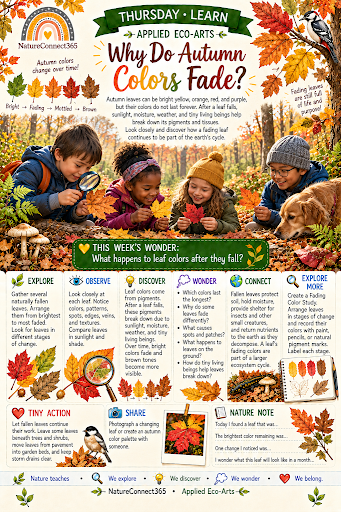
#NatureConnect365 #AppliedEcoArts #ThursdayLearn #AutumnColors #FallenLeaves #LeafLitter #Decomposition #SoilLife #SeasonalChange #LeaveTheLeaves #OutdoorLearning #NatureConnection #NatureStudy #Wonder