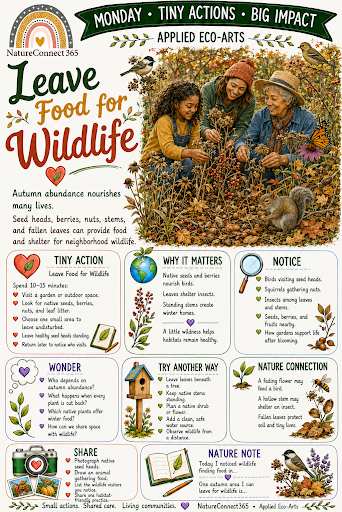
🐦 Leave Food for Wildlife
Autumn abundance nourishes many lives.
Seed heads, berries, nuts, fallen fruit, stems, and leaves can provide food and shelter for birds, insects, and other neighborhood wildlife. Allow one small part of your garden or outdoor space to remain naturally abundant.
What we leave can become a gift.
❤️ Tiny Action
Leave Food for Wildlife
Spend 10–15 minutes:
Visit a garden, yard, schoolyard, or community space.
Look for native seed heads, berries, nuts, fallen fruit, and leaf litter.
Choose a small area that can remain undisturbed.
Leave healthy native flower heads standing.
Allow fallen leaves to rest beneath trees or in garden beds.
Observe the area quietly from a respectful distance.
Return later to notice which animals visit.
Leave natural food where it already grows, without placing household food outdoors or approaching wildlife.
🌎 Why It Matters
Wildlife depends on seasonal food and safe habitat.
Native seeds and berries help nourish birds. Fallen leaves shelter insects and other small beings. Plant stems create winter homes, while nuts and naturally fallen fruit support animals preparing for colder weather.
Allowing part of a landscape to remain a little wild helps food, shelter, and nutrients continue moving through the ecosystem.
🔍 Notice
Notice…
Birds visiting seed heads, shrubs, or trees.
Squirrels and other animals gathering and storing food.
Insects resting among leaves and plant stems.
Seeds, berries, nuts, and fruits available in your area.
How a garden continues supporting life after flowering ends.
💭 Wonder
Which animals depend on autumn seeds, berries, nuts, and leaves?
What happens to a garden when every plant is cut back?
Which native plants offer food through fall and winter?
How can people share outdoor spaces with wildlife?
🌈 Try Another Way
Want to offer more habitat?
Try…
Leave a small patch of fallen leaves beneath a tree.
Keep native perennial stems standing through winter.
Add a locally appropriate native shrub or flower to your planting plan.
Place a clean birdbath or shallow water source in a safe location.
Observe wildlife without touching, feeding, or approaching.
Invite someone to help create a wildlife-friendly garden area.
🌱 Nature Connection
Autumn gardens are still full of purpose.
A fading flower may hold seeds for a bird. A hollow stem may shelter an insect. Fallen leaves protect soil, hold moisture, and create places for small beings to rest.
When we allow some natural abundance to remain, we participate in the seasonal exchange of nourishment and care.
📸 Share
Choose one:
Photograph native seed heads or berries from a respectful distance.
Draw an animal gathering autumn food.
Make a list of wildlife visitors you observe.
Share a wildlife-friendly garden practice.
Invite someone to leave one small area naturally abundant.
📝 Nature Note
Today I noticed wildlife finding food in…
or
One part of the autumn landscape I can leave for wildlife is…
#TinyActionsBigImpact #NatureConnect365 #AppliedEcoArts #LeaveFoodForWildlife #WildlifeCare #HabitatAtHome #LeaveTheLeaves #NativePlants #BirdFriendlyGarden #Stewardship #NatureConnection #AutumnGarden