🍂Make Glycerin Leaf Bunting
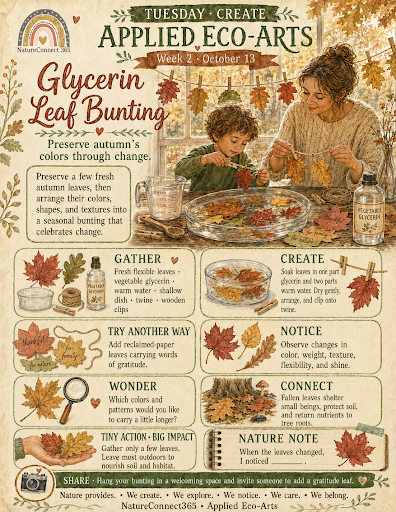
Glycerin Leaf Bunting
Gather a small collection of fresh autumn leaves and preserve their flexibility with glycerin and water. Explore color, shape, texture, pattern, and seasonal change as you arrange the leaves into a bunting for a window, gathering place, or gratitude display.
Let the leaves remain creative partners whose natural differences guide your design.
🌱 Materials
Fresh, flexible autumn leaves with stems
Vegetable glycerin
Warm water
Measuring cup
Shallow reusable container
Spoon
Small washable plate or another gentle weight
Reusable gloves, if desired
Absorbent cloth or reused paper
Wax paper or a washable work mat
Twine, reused ribbon, or natural cord
Wooden clothespins or clips
Optional blunt needle and strong thread
Optional hole punch for paper additions
Reclaimed paper for gratitude leaves
Nontoxic markers or colored pencils
Journal or sketch paper
Suggested mixture: One part vegetable glycerin to two parts warm water.
Safety Note: Glycerin and preserved leaves are creative materials and should not be eaten. Supervise young children, wipe spills promptly, and keep the mixture away from eyes and mouths. Confirm that gathering is permitted and learn to recognize plants that may irritate skin.
✨ Create
1 • Visit the Leaves
Choose a place where deciduous trees and shrubs are changing color.
Walk slowly and notice:
Leaves still attached to branches
Recently fallen leaves
Changes from green to yellow, orange, red, or brown
Veins and branching patterns
Smooth, toothed, or lobed edges
Leaves curled by dryness
Signs of insects or weather
Gather a modest number of fresh, flexible leaves. Leave abundant leaf material outdoors for soil, fungi, insects, and other animals.
2 • Choose Leaves for Preserving
Select leaves that are:
Fresh and flexible
Free from mold
Mostly intact
Attached to a short stem
Varied in color or shape
Meaningful to your experience of the place
Very dry, brittle leaves are less likely to absorb the mixture evenly. They can remain outdoors or become drawing references.
3 • Record the Original Colors
Before preserving the leaves, arrange them on a light-colored surface.
Sketch or photograph the collection. Create small color swatches beside each leaf. Give the colors descriptive names such as:
Maple flame
Harvest gold
Moss shadow
Russet earth
Apple blush
Rain-dark bark
This record will help you notice what changes during preservation.
4 • Prepare the Glycerin Mixture
With adult support, combine one part vegetable glycerin with two parts warm water in a shallow reusable container.
Stir slowly and observe:
How glycerin moves
How it feels compared with water
The way the liquids combine
Reflections on the surface
The small currents created by the spoon
Prepare enough mixture to surround the leaves.
5 • Rest the Leaves
Place the leaves in the mixture. Arrange them so they have room to absorb the liquid.
Set a small washable plate or another gentle weight over them to keep them submerged. Allow the leaves to rest for several days.
Check them daily. Depending on the leaf species, freshness, and thickness, preservation may take approximately two to seven days.
Notice whether:
Colors deepen or soften
Surfaces become glossy
Leaves feel heavier
Stems darken
Edges remain flexible
6 • Remove and Dry
When the leaves feel soft and flexible, remove them from the mixture.
Blot both sides gently with an absorbent cloth or reused paper. Place them on a protected surface until the exterior feels dry.
Wash the container and tools thoroughly. Glycerin can make floors and tables slippery, so clean any spills promptly.
7 • Discover an Arrangement
Lay out the leaves before attaching them to the cord.
Try arranging them by:
Color
Size
Tree species
Leaf shape
Light to dark
A repeating sequence
A gradual seasonal transition
A pattern inspired by music
A story of your walk
Personal meaning
Allow asymmetry, marks, holes, and changing colors to remain part of the design.
8 • Assemble the Bunting
Stretch a length of twine or reused ribbon across the work surface.
Attach the leaves with small wooden clothespins or clips. An adult can help stitch through sturdy stems when appropriate.
Add reclaimed-paper leaves carrying:
Words of gratitude
Names of local trees
Seasonal observations
Small drawings
Questions about autumn
Hopes for the coming season
Hang the bunting indoors away from direct heat, moisture, pets, and prolonged intense sunlight.
🎨 Create with Preserved Leaves
Use your leaves to:
Create a seasonal window display
Frame a doorway or community table
Make a leaf color gradient
Build a gratitude bunting
Compare tree species
Create leaf-vein drawings
Pair each leaf with a descriptive word
Add leaves to a seasonal story
Make a hanging mobile
Create a pattern study
Document autumn color changes
Welcome visitors into a shared space
🔍 Notice
Pay attention to:
The leaf’s texture before and after soaking
Changes in weight and flexibility
Colors that deepen, fade, or blend
Different absorption rates
The branching structure of veins
Evidence of insects, wind, rain, and sunlight
The relationship between stem and leaf
Repeating patterns across several species
Shadows cast by the hanging leaves
Movement created by indoor air
How the bunting changes the feeling of a space
💭 Wonder
Why do leaves change color?
What happens to chlorophyll during autumn?
Why do some trees change earlier than others?
How does glycerin help a leaf remain flexible?
Which leaves absorb the mixture most readily?
What stories are held in spots, holes, and torn edges?
How does preserving a leaf change our relationship with seasonal time?
What belongs in our creative space?
What belongs outdoors within the living system?
Can beauty include change, irregularity, and age?
How can a garland welcome people into a place?
🌎 Connect
Leaves are the food-making surfaces of trees. Through photosynthesis, they use sunlight, water, and carbon dioxide to create sugars that support growth. Their veins transport water and nutrients while helping each leaf hold its form.
As autumn light and temperature change, many trees begin withdrawing useful materials from their leaves. Green chlorophyll fades, revealing yellow and orange pigments. Other chemical processes can create red and purple colors.
Fallen leaves continue participating in the ecosystem. They protect soil, hold moisture, shelter insects, support fungi, and return nutrients to the roots of future growth.
🌈 Explore Further
Identify the trees that offered your leaves.
Compare leaves from sunny and shaded locations.
Trace the branching patterns of several veins.
Create leaf rubbings before preservation.
Measure each leaf and arrange them by size.
Track one tree’s changing colors for several weeks.
Compare preserved and naturally dried leaves.
Create a leaf-color vocabulary.
Add gratitude messages from several people.
Make a field sketch of the trees.
Investigate which animals use leaf litter.
Return untreated natural remnants to an appropriate outdoor place.
📸 Share
Photograph your completed bunting and the place where it hangs.
Share:
The place where the leaves were gathered
The trees that offered them
A color that surprised you
A texture that changed
The pattern you created
A gratitude message
The way the bunting changed your space
The name of your autumn display
Share with #NatureConnect365 and invite others to notice the colors that autumn is offering.
❤️ Tiny Action • Big Impact
Gather only the small number of leaves needed for your creative exploration. Allow most fallen leaves to remain beneath trees, in garden beds, or in designated habitat areas.
Leaf litter supports soil health and provides shelter for overwintering insects and other small beings. A few preserved leaves can celebrate autumn while the wider leaf community continues its ecological work.
📝 Nature Note
I gathered my leaves from:
The trees or shrubs I noticed were:
Before preserving, the leaves felt:
The colors changed by:
The pattern I created was inspired by:
My gratitude leaf says:
When I hung the bunting, the space felt:
I named my bunting:
#NatureConnect365 #AppliedEcoArts #LeafBunting #AutumnLeaves #NatureArt #SeasonalChange #TinyActionsBigImpact #CreateWithNature