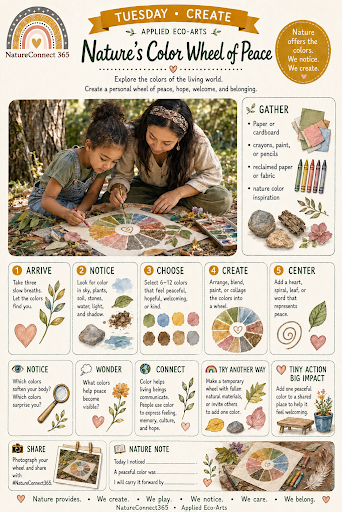
🌼 Nature’s Color Wheel of Peace
Explore the colors of the living world and notice which ones feel peaceful, hopeful, welcoming, or kind to you. Create a personal color wheel that brings together nature observation, emotional awareness, and creative expression.
🌱 Materials
Sturdy paper, reused cardboard, or a paper plate
Pencil
Crayons, colored pencils, markers, pastels, or watercolor paints
Paintbrushes and water, if using paint
Scissors
Glue
Small pieces of reclaimed paper, fabric, or yarn
Optional fallen natural materials, such as leaves, petals, bark, or grasses
A journal or extra sheet of paper
A comfortable indoor or outdoor place for observing color
✨ Create
1 • Arrive
Find a comfortable place where you can see the sky, plants, soil, water, stones, or other parts of the living world.
Take three slow breaths. Let your eyes move gently around the space without searching for anything in particular.
What colors begin to find you?
2 • Notice the Colors Around You
Look closely for familiar colors and subtle variations.
Notice:
The many greens within one plant
The colors found in soil, stone, and bark
The changing colors of the sky
Bright flowers, berries, or seeds
Shadows and reflected light
Colors created where two natural forms meet
Name or describe the colors in your own way. You might discover moss green, cloudy blue, golden grass, creek-stone gray, or sunset peach.
3 • Gather Color Inspiration
Choose six to twelve colors that catch your attention.
You can record them by:
Making small color swatches
Writing descriptive color names
Matching them with crayons, pencils, or paint
Photographing the colors
Collecting small fallen materials
Using reclaimed fabric or paper with similar colors
Gather thoughtfully. Allow growing plants and wildlife habitats to remain intact.
4 • Create Your Color Wheel
Draw a large circle and divide it into sections. Add one observed color to each section using paint, crayons, collage materials, fabric, yarn, or natural pigments.
Arrange your colors in any way that feels meaningful. They might move from light to dark, warm to cool, familiar to surprising, or calm to joyful.
Let nature become your creative partner.
5 • Connect Color with Feeling
Pause with each section of your wheel.
Ask yourself:
Which color helps my body soften?
Which color feels welcoming?
Which color carries hope?
Which color reminds me of kindness?
Which color feels like belonging?
Which color gives me energy to care?
Add a word, symbol, line, or small pattern to each color section to express what it holds for you.
6 • Complete the Center
In the center of your wheel, draw or write something that represents peace.
You might add:
A heart
A spiral
A leaf
A circle
A nest
Open hands
A word or short phrase
A symbol of your own creation
Your center can hold the intention that connects all the colors.
🌈 Try Another Way
Create a color wheel using only reclaimed paper or fabric.
Make a temporary wheel outdoors with fallen natural materials.
Invite several people to contribute one color each.
Create a color wheel based on one familiar place.
Make a tiny wheel that can be carried as a peace reminder.
Pair each color with a movement, breath, sound, or kind action.
Create a seasonal peace wheel and revisit it as the landscape changes.
Photograph colors outdoors and arrange the images into a digital wheel.
🔍 Notice
As you create, pay attention to:
Colors that appear frequently in your surroundings
Subtle differences within the same color family
Colors that attract your attention first
Changes in color created by sunlight and shadow
How your breathing or body responds to different colors
Memories or feelings connected with particular colors
How neighboring colors influence one another
Which colors feel peaceful today
💭 Wonder
Why do different colors feel different in our bodies?
Can one color carry several feelings or meanings?
Do people experience peaceful colors in the same way?
How do plants, animals, soil, water, and sky create color?
How does color help living beings communicate?
Which colors change as the seasons move?
How might color help a place feel welcoming?
What colors would a community wheel of peace include?
🌎 Connect
Color helps the living world communicate. Flowers use color to attract pollinators. Animals use color for recognition, protection, warning, and display. Leaves change as sunlight, temperature, water, and plant pigments interact.
People also use color to express feelings, identity, memory, culture, and hope. Your Nature’s Color Wheel of Peace brings these relationships together. Each color becomes part of a larger ecology of personal experience, shared meaning, and connection with place.
Peace can include many colors, just as a healthy ecosystem includes many forms of life.
❤️ Tiny Action • Big Impact
Choose one color from your wheel and use it to make a shared place feel more peaceful or welcoming.
You might add a small drawing to a classroom, place a colorful natural object on a community table, wear a color that reminds you to practice kindness, or create a small message of encouragement for someone else.
One thoughtful addition can gently change the feeling of a place.
📸 Share
Photograph your completed color wheel or the natural colors that inspired it.
Share:
One color that surprised you
One feeling you connected with a color
The peace symbol you placed at the center
A place where you noticed an unexpected color
One way you will carry your peace color into the week
Share your creation with #NatureConnect365 and invite someone else to explore the colors of peace.
📝 Nature Note
Today I explored colors at:
The first color that found my attention was:
A color that felt peaceful was:
It reminded me of:
A color that surprised me was:
At the center of my wheel, I placed:
One way I can carry this color of peace forward is:
Make it stand out
Whatever it is, the way you tell your story online can make all the difference.
#NatureConnect365 #CreateWithNature #AppliedEcoArts #GratitudeSpiral #EcoSoma #AllAgesInNature #SoundAsPractice #EmbodiedLearning #ProcessOverProduct #TinyActionBigImpact